Ghosted by the Geofence: Why Your Betting App Loses You at the State Line
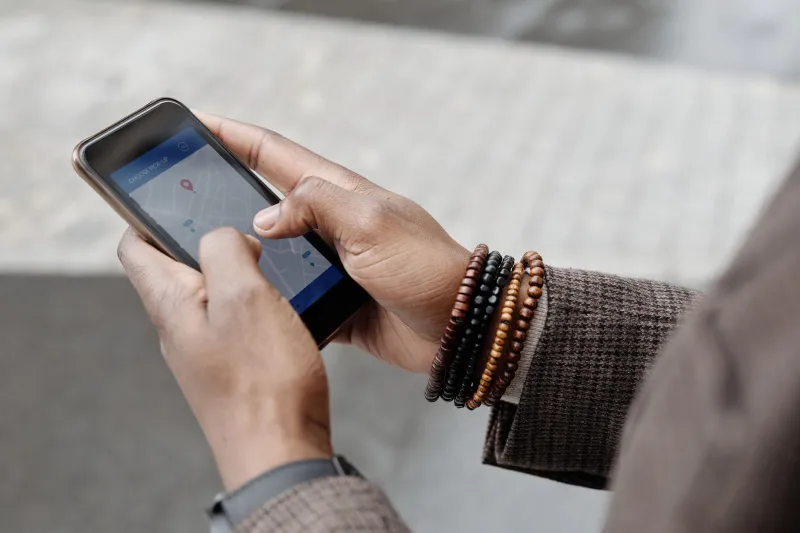
It's Sunday at 12:58 p.m. ET. You've got the app open, your parlay is built, and the kickoff clock is ticking. You tap place bet. Instead of a ticket, you get a gray screen: We can't confirm your location. You're in your living room. Your phone says you're in your living room. Your sportsbook, apparently, thinks you're somewhere else entirely.
Welcome to the invisible fence. In 2026, mobile betting in the US runs on a geolocation system that's part GPS, part Wi-Fi map, part carrier data, and part guesswork. Most days it works fine. On the days it doesn't, it can make a legal bettor feel like a suspect — and make a careless one lose access to their account.
The Fence You Never See
Legal online sportsbooks in the US are required to verify that you're physically inside a state where betting is permitted — not just that you have a local area code or a billing address in the right place. That verification happens every time you log in, every time you open a bet slip, and every time you hit submit. The book doesn't just check once and hand you a wristband.
Behind the app, a third-party geolocation vendor is stacking signals: GPS coordinates from your phone, the names and signal strengths of nearby Wi-Fi networks, your mobile carrier's tower data, and your device's IP address. The system cross-references those against known databases of state boundaries, Wi-Fi network locations, and carrier ranges. If the signals agree, you bet. If they conflict, you get the gray screen.
The tricky part is that those signals don't always agree. GPS drifts. Wi-Fi databases go stale. A router gets moved across a state line and the database doesn't get the memo. Your phone might hand off to a tower in the next state while you're sitting still. None of that is cheating. It's just physics and bad record-keeping.
Three False Alarms That Freeze Honest Bettors
The shaky Wi-Fi problem. Public Wi-Fi at a bar, hotel, or airport can make your device look like it's wherever the router's IP address is registered — which might be a state away. If you're on hotel Wi-Fi near a border, the app may see a Wi-Fi network it associates with the wrong jurisdiction. The fix is usually simple: turn off Wi-Fi, switch to cellular, and try again. Your carrier's location data is often more accurate than a borrowed router.
The road-trip handoff. Betting while moving is a bad idea for more reasons than one. If you're driving from Nevada into California, or from New Jersey into Pennsylvania, your phone may briefly register in both states as towers hand off. Some apps will lock the bet slip until location stabilizes. Others may flag the account for review. The clean play: place bets before you leave, or wait until you've stopped and your phone has settled for a few minutes. Don't tap submit at 70 mph and expect the geofence to be polite about it.
The border-town drift. If you live in a metro area that straddles a state line — think Kansas City, Cincinnati, or the Quad Cities — GPS drift of a few hundred feet can put you on the wrong side of the law without you moving an inch. Step outside, give the phone a clear view of the sky, toggle location services off and on, and try again. If it keeps happening, your device may be relying on a stale Wi-Fi database. Forgetting the network and reconnecting on cellular often clears it.
VPNs, Spoofers, and the Line You Don't Cross
Here's where innocent glitches end and account-ending decisions begin. Using a VPN to make your device appear to be in a legal betting state is not a clever workaround. It's a violation of every major sportsbook's terms of service, and in some states it's a violation of the law itself. Geolocation vendors are built to detect VPN traffic, and books have gotten much better at spotting it since the early app days.
Location-spoofing apps are worse. They're easy to install, easy for the book to detect, and a fast track to a frozen account and a funds review. If the book suspects you've been betting from outside the permitted area, it can void wagers, lock withdrawals, and close the account. You don't want to explain a spoofing app to a compliance team while your balance sits in limbo.
The rule is boring but useful: bet only where you're legally allowed to be, and let the app see the truth. If the truth is inconvenient — say, you're on a business trip to a non-betting state — the answer is to skip the bet, not to fake the fence.
What a Flag Actually Means
A location error isn't always a lockout. Sometimes it's a temporary pause. But repeated failed checks, mismatched signals, or a pattern that looks like evasion can push your account into manual review. That can mean a hold on withdrawals, a request for identity documents, or a conversation with support that you'd rather not have on a Sunday afternoon.
The best defense is a clean history. Don't create duplicate accounts to get around a location issue. Don't borrow a friend's phone to place a bet from a state where you aren't standing. Don't switch payment methods mid-review to see if that fixes it. Compliance teams notice patterns, and the pattern they like is a player who stays put and tells the truth.
The Pre-Kickoff Location Checklist
Before you build a bet, run this quick routine:
- Turn on precise location in your phone settings and give the sportsbook app permission to use it.
- Kill the VPN — not just pause it. Fully disconnect.
- Drop public Wi-Fi and use cellular data if you're near a border or a hotel network.
- Give the app a few seconds to settle after opening it. Don't tap place bet the instant the logo loads.
- Step outside if you're in a border town and getting errors. Sky view helps GPS.
- Update the app before the weekend slate. Old versions can have stale location libraries.
- Test with a small bet or a bet-slip refresh well before kickoff, not at the two-minute warning.
- Don't bet while moving across state lines. Pull over, wait, then try.
If the app still won't cooperate, contact support with specifics: your location, the error message, the time, and whether you're on Wi-Fi or cellular. Don't argue about the law. Ask for a location reset or a manual review. Most books have a process for honest glitches.
At QH88F8 VIP, we'd rather you miss one kickoff than lose an account over a bad Wi-Fi signal. The geofence isn't going anywhere in 2026. Learn how it sees you, keep your signals clean, and save your risk for the bet slip — not the compliance queue.
Play bold. Win big. Bet smarter.